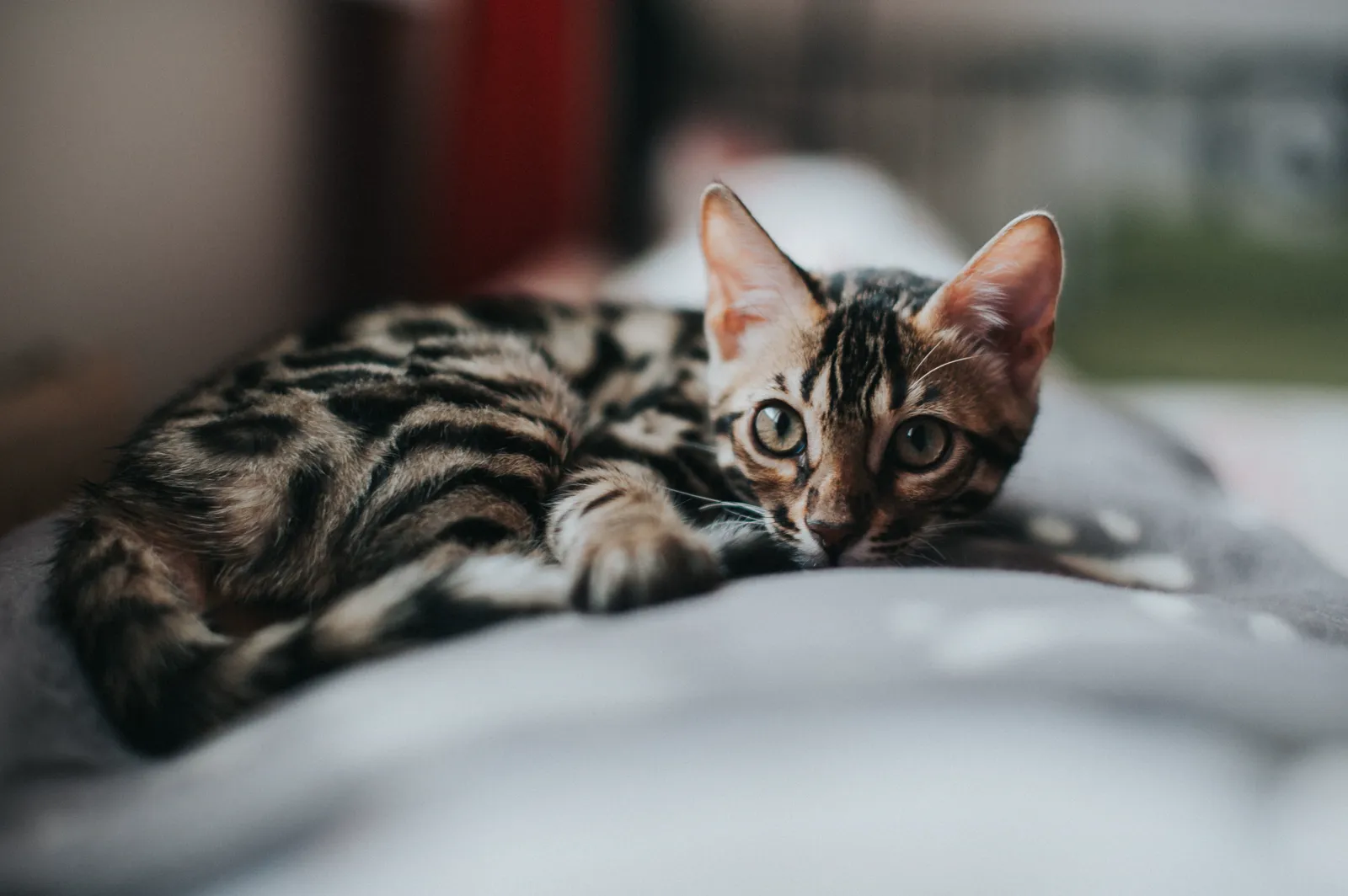
Breed overview
The Bengal was developed in the United States in the 1960s–80s by crossing a domestic cat with the wild Asian leopard cat. The aim was the look of a wild predator with the character of a pet. Modern Bengals are at least the fourth generation (F4 and beyond) and fully domestic.
The distinctive feature is the spotted or marbled pattern with a “glitter” effect: the coat literally shimmers in the sun. The body is muscular and elongated, weighing 4–8 kg. A Bengal moves noticeably differently from an ordinary cat — low, smooth and predatory.
The breed is not hypoallergenic, although this myth is common. The short coat simply spreads less around the flat, but Bengals produce the Fel d1 protein just like any other cat.
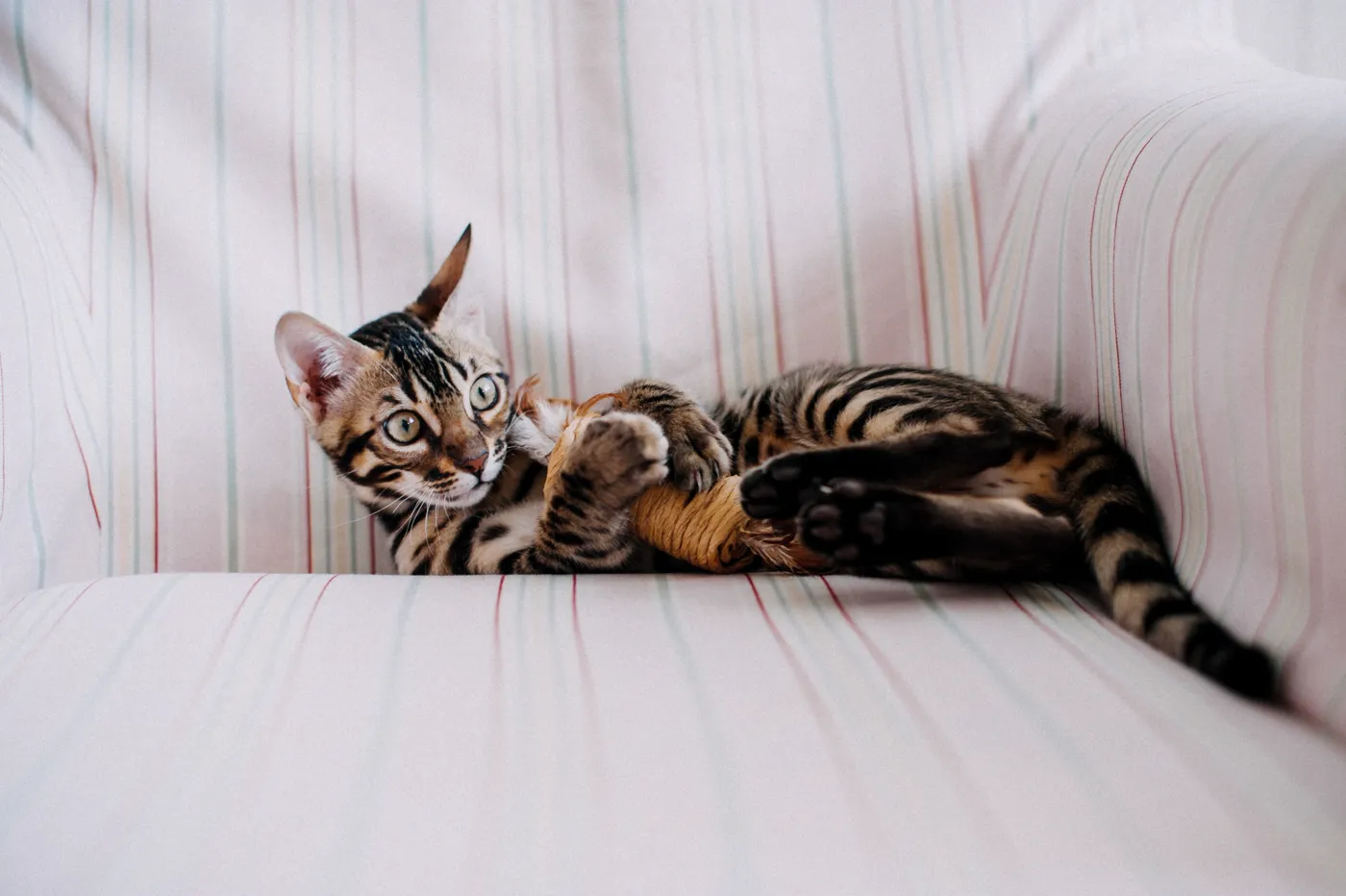
Temperament
The Bengal is the most active of the popular breeds. It needs tall cat trees, shelves near the ceiling, wand toys and daily play with its owner. A cat with nothing to do opens cupboards, turns on taps and knocks things off shelves — not out of spite, but from an excess of energy.
The breed learns superbly: Bengals fetch toys, walk on a harness, respond to their name and pick up tricks. Many love water and happily climb into the bath or under the shower.
The voice is loud and expressive: a Bengal actively talks to its owner. For anyone who wants a quiet cat, that is rather a drawback.
Care and health
Coat care is minimal: brushing once a week with a rubber brush. Claws are trimmed regularly — with this much activity they grow fast and catch on fabrics.
The breed's hereditary risks are progressive retinal atrophy (PRA-b), pyruvate kinase deficiency (PK-def) and hypertrophic cardiomyopathy. All three can be checked: the first two by DNA test, the third by echocardiography of the breeding cats.
The diet is quality food high in animal protein. Some Bengals have sensitive digestion, so food is changed gradually over seven to ten days.
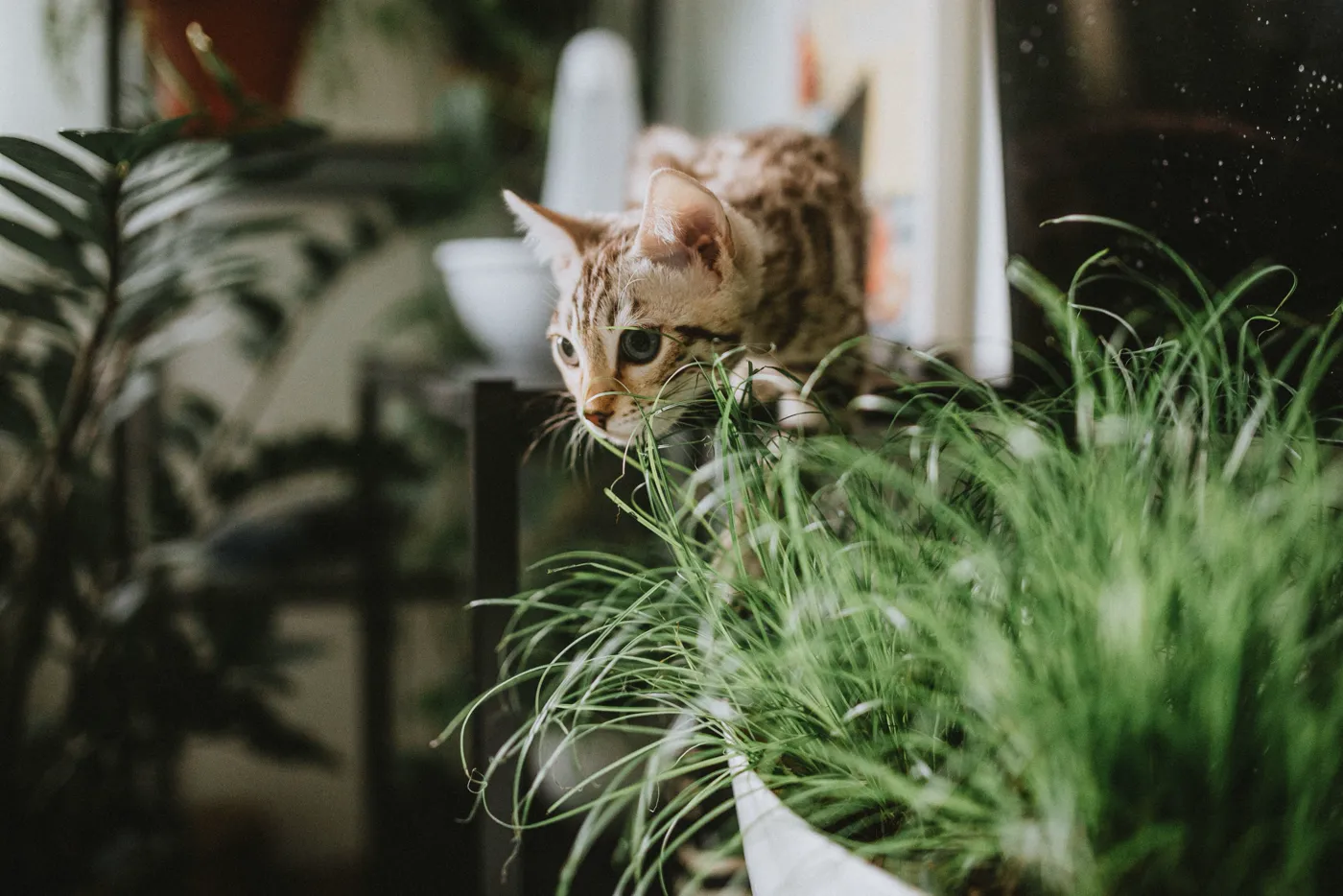
Keeping
A flat is fine, but vertical routes and daily play of at least 30–40 minutes are essential. A Bengal without exercise becomes nervous and destructive.
Cat-proof window screens are strictly required: the jumping ability and hunting instinct make an open window lethal. Many owners train a Bengal to a harness and walk it outdoors.
Price in Moldova
A Bengal kitten in Moldova costs 4,000–14,000 MDL. Pet class — 4,000–7,000 MDL; show class with a bright contrasting pattern and papers — 10,000–14,000 MDL. Rare colours (snow, silver, charcoal) cost more.
A low price almost always means no papers and no parental testing. For a breed with known hereditary diseases that is a significant risk.