Breed overview
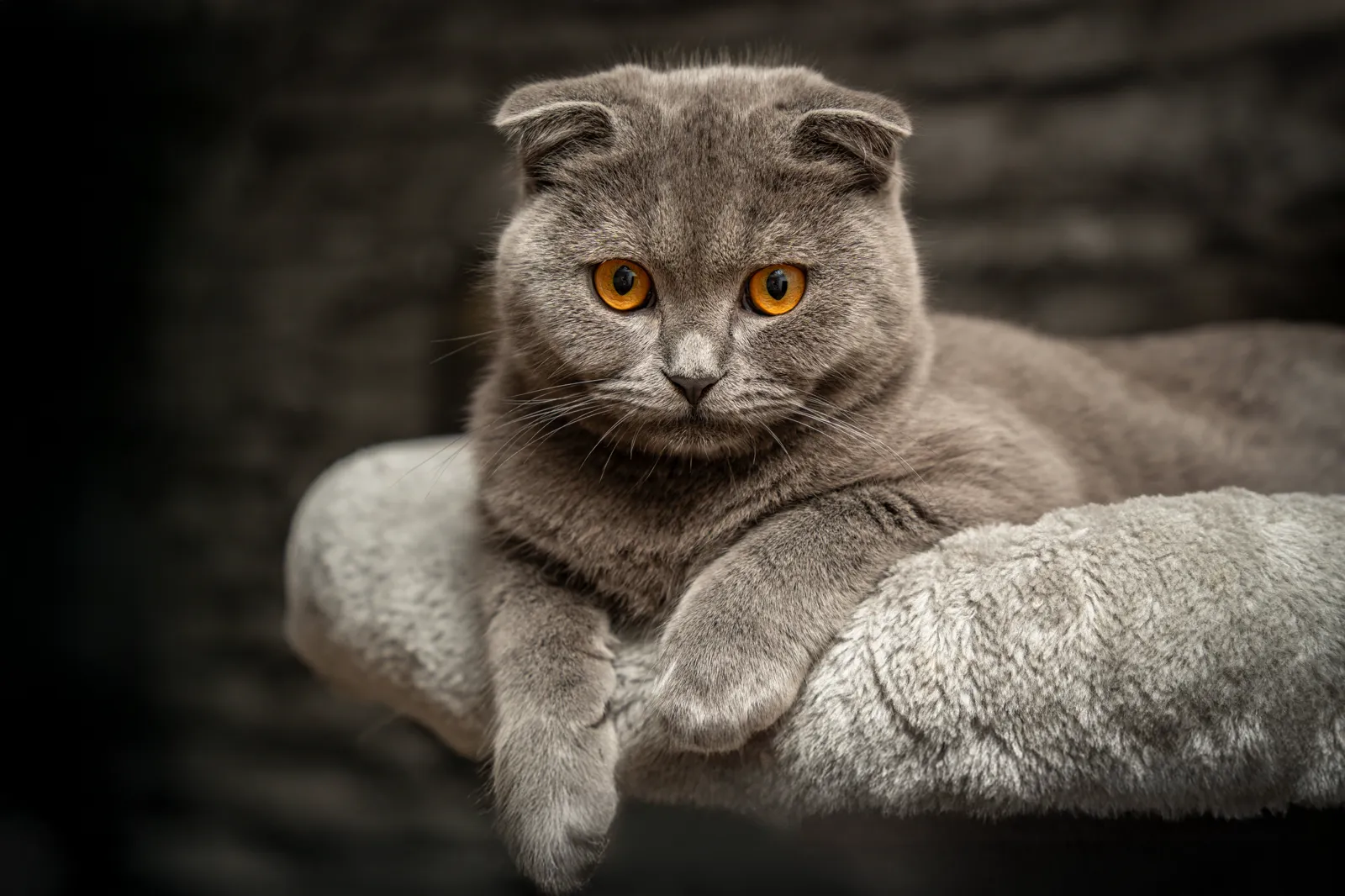
The breed's history began in 1961 in Scotland with a cat named Susie whose ears lay flat against her head because of a natural mutation. Every modern Scottish Fold is her descendant. The folded ears come from the Fd gene, which affects the development of cartilage.
The Scottish Fold is a medium-sized cat of 3–6 kg with a rounded head, large eyes and a dense coat. There are four varieties: Scottish Fold (folded ears, short hair), Highland Fold (semi-long hair), Scottish Straight and Highland Straight — the straight-eared ones.
The key breeding rule: two folded-ear cats are never mated to each other. Such a pairing produces kittens with severe osteochondrodysplasia — a painful joint disorder. The only correct mating is fold × straight, and the litter contains kittens of both types.
Temperament
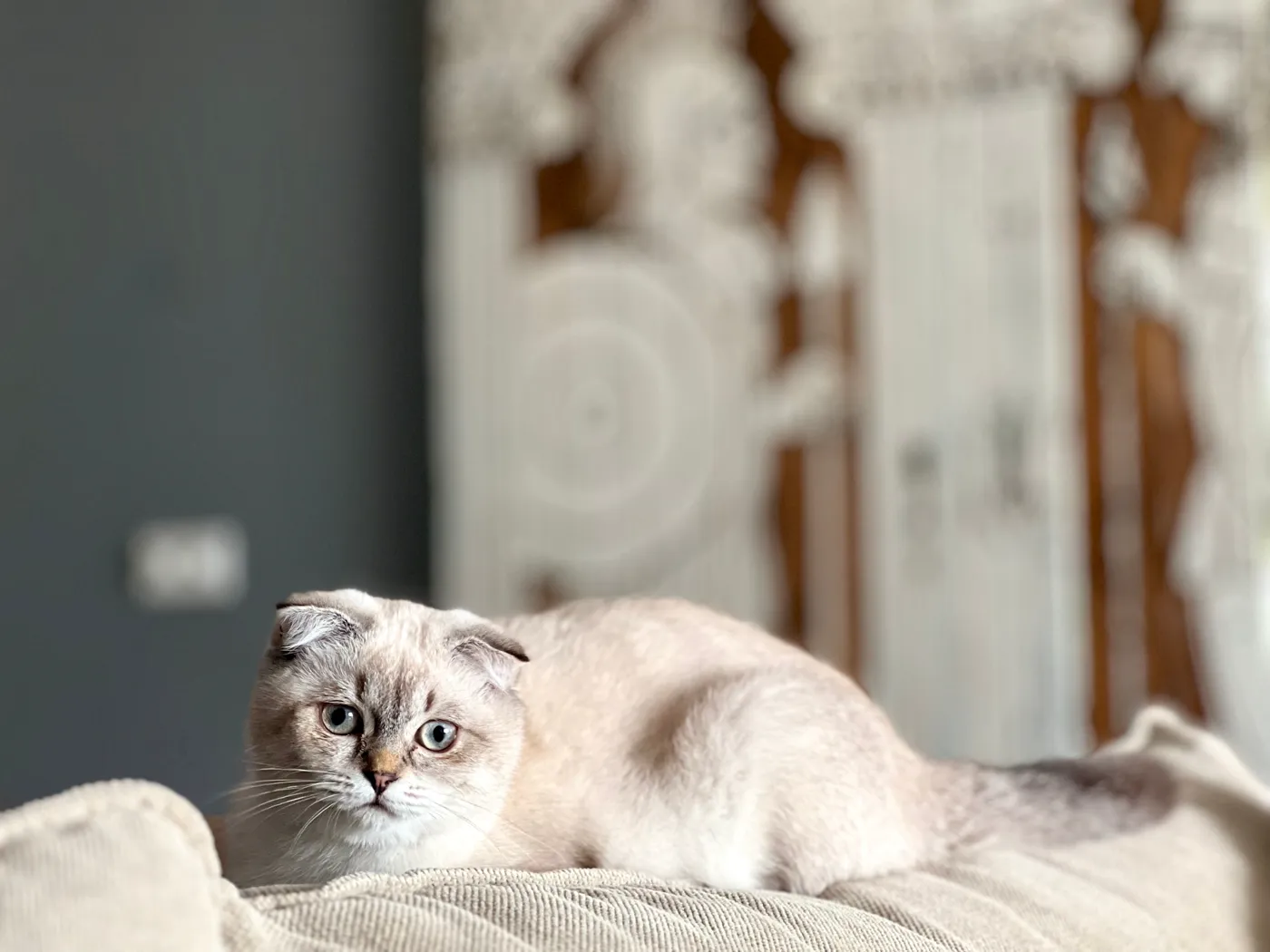
The Scottish Fold is noticeably more sociable than the British: it comes onto your lap, sleeps beside its owner and takes part in every household activity. At the same time it is not pushy and does not demand constant attention.
Its voice is quiet and slightly creaky. The breed is known for sitting up on its hind legs like a meerkat and for sleeping on its back — not a sign of trouble, but a behavioural quirk.
Folds get on well with children and other animals. Aggression is not characteristic of the breed: in a conflict the cat prefers to walk away.
Care and health
Short-haired cats are combed once a week, Highland Folds two or three times. The ears need particular attention: because of their folded shape they ventilate poorly, so weekly inspection and cleaning are needed.
The defining feature of the breed is osteochondrodysplasia. Even with correct mating a Fold stays in the risk group, so watch the gait and the mobility of the tail: stiffness, reluctance to jump, a thickened, barely moving tail are reasons for an X-ray.
Polycystic kidney disease and cardiomyopathy also occur. A responsible cattery tests its breeding cats and never mates fold to fold — this is the first question worth asking a seller.
Keeping
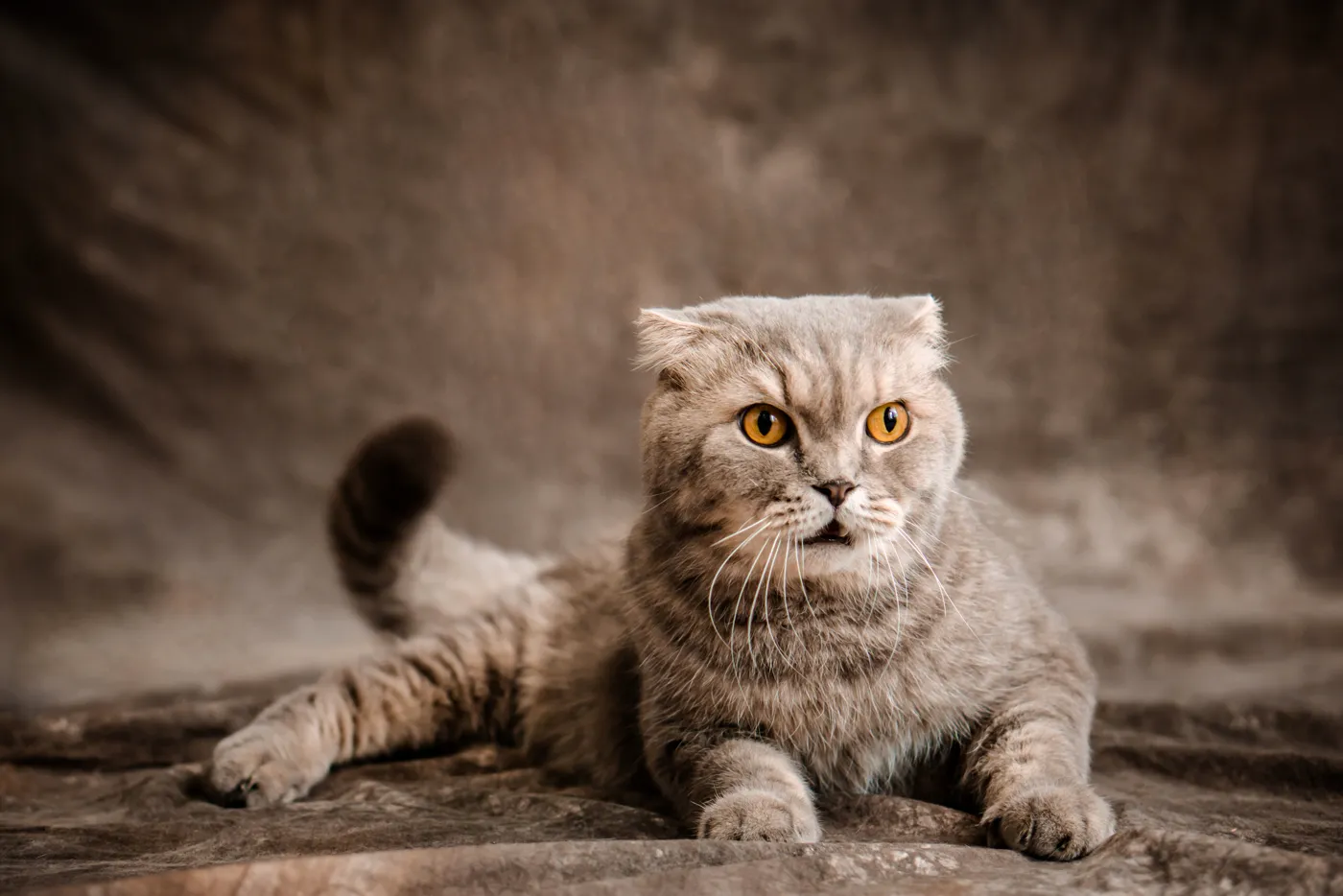
The cat lives comfortably in a flat; a scratching post, toys and a bed in a warm spot are enough. High jumps are better not encouraged: the breed's joints are vulnerable and landing from a height adds extra strain.
Soft bedding, low cat furniture and weight control noticeably reduce the risk of joint problems in later life.
Price in Moldova
A Scottish Fold kitten in Moldova costs 2,500–9,000 MDL. Without papers — 2,500–4,000 MDL; from a cattery with a registration — 5,500–9,000 MDL. Straight-eared kittens from the same litter are usually cheaper than the folded ones.
Ask the seller for the papers of both parents. A litter from a fold × fold mating is cheaper, but joint problems in such kittens are all but guaranteed.