Breed overview
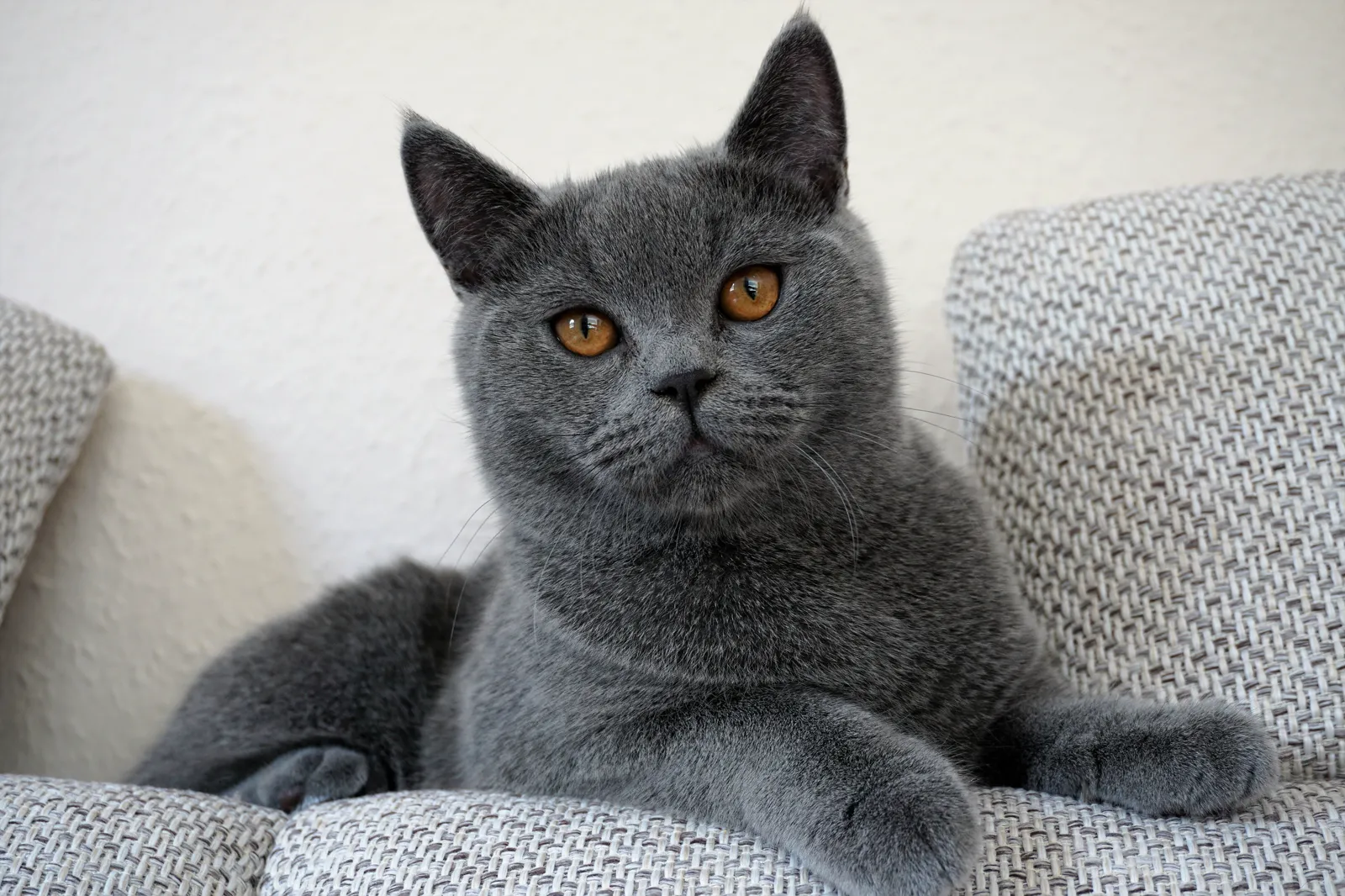
The British Shorthair is one of the oldest recognised breeds, formalised in England at the end of the 19th century from ordinary island cats. After the Second World War the population was rebuilt with an infusion of Persian blood, which gave the breed its rounded shapes and dense plush coat.
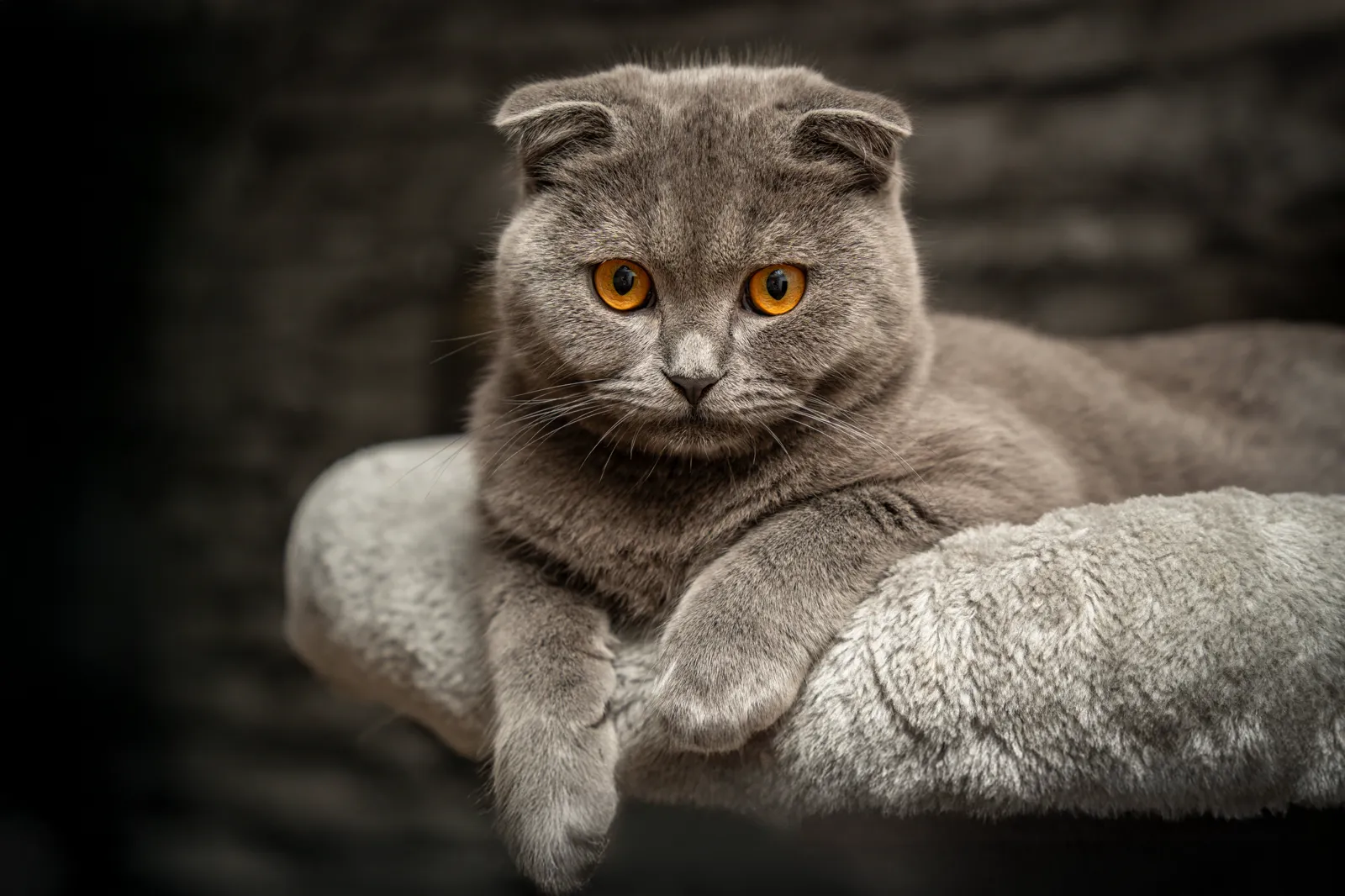
This is a compact cat with a broad chest, a round head, full cheeks and large round eyes. Males weigh 5–8 kg, females 4–6 kg. The best-known colour is blue (grey), but the standard allows more than sixty variants, including lilac, chocolate, silver tabby and colourpoint.
The British is often confused with the Scottish Fold: the breeds are similar in type, but a British always has straight ears. Another common mistake is calling any grey cat without papers a “British”.
Temperament
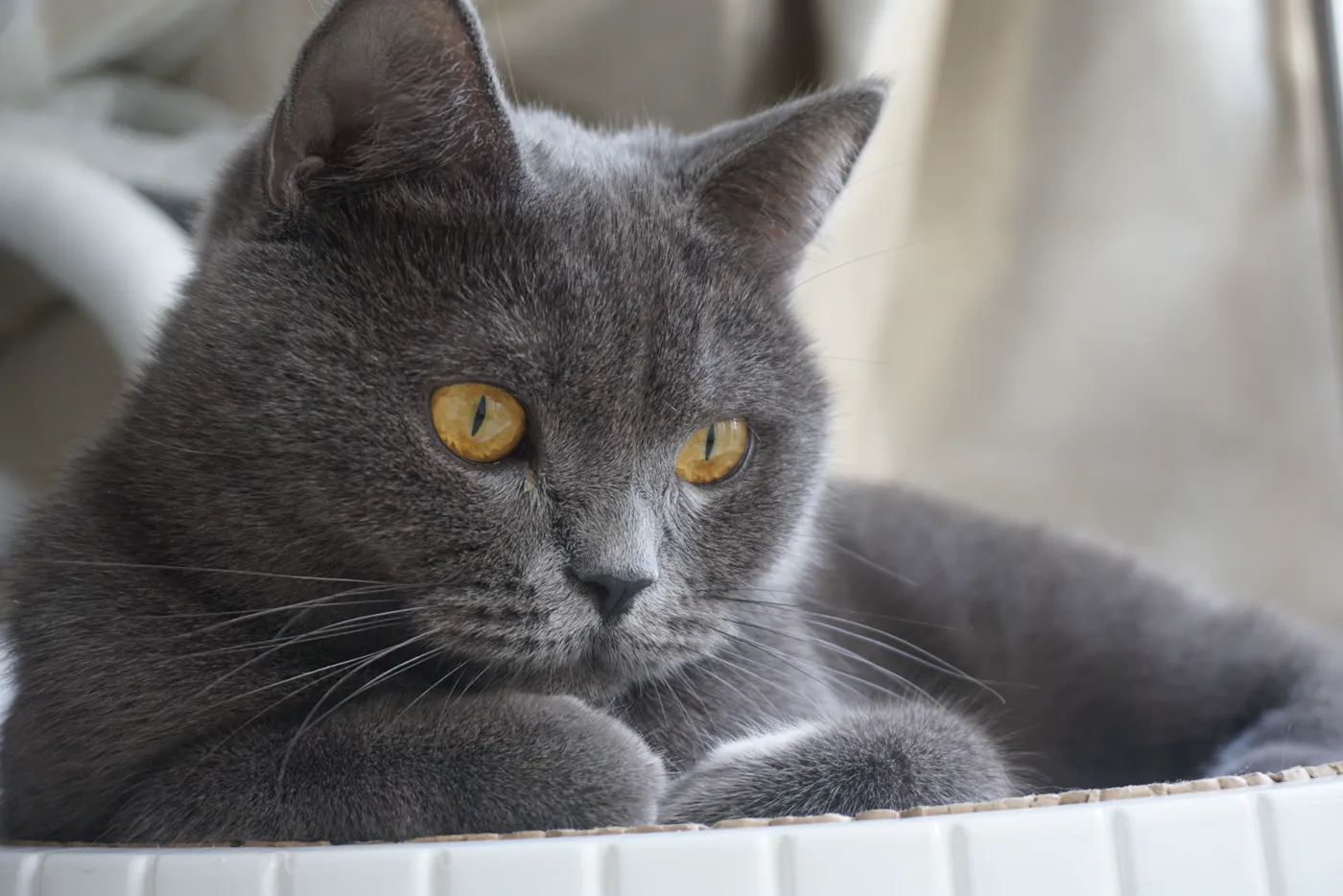
The British is an introvert among cats. It is attached to its owner but dislikes sitting on a lap for long and hardly ever clings to people. Typical behaviour is lying in the same room, watching what happens from a distance.
The breed handles a working day alone calmly and does not wreck the place out of boredom, which suits people with a full schedule. Its voice is quiet and it rarely meows without reason.
The British is patient with children but will not be squeezed: if a child does not leave the cat alone, it simply walks away. Aggression is not characteristic of the breed.
Care and health
The dense coat with its thick undercoat is combed once or twice a week, more often during the moult. Bathing is rare: the undercoat takes a long time to dry. Claws, teeth and ears get the standard attention.
The main risk of the breed is hypertrophic cardiomyopathy and polycystic kidney disease (PKD). Both are detected by testing the breeding cats, so ask the breeder for the echocardiogram results and the PKD DNA test.
British cats tend to gain weight, especially after neutering. Portions are measured against the feeding guide rather than by eye, and play activity is provided — otherwise the cat turns into a sedentary ball by the age of three.
Keeping
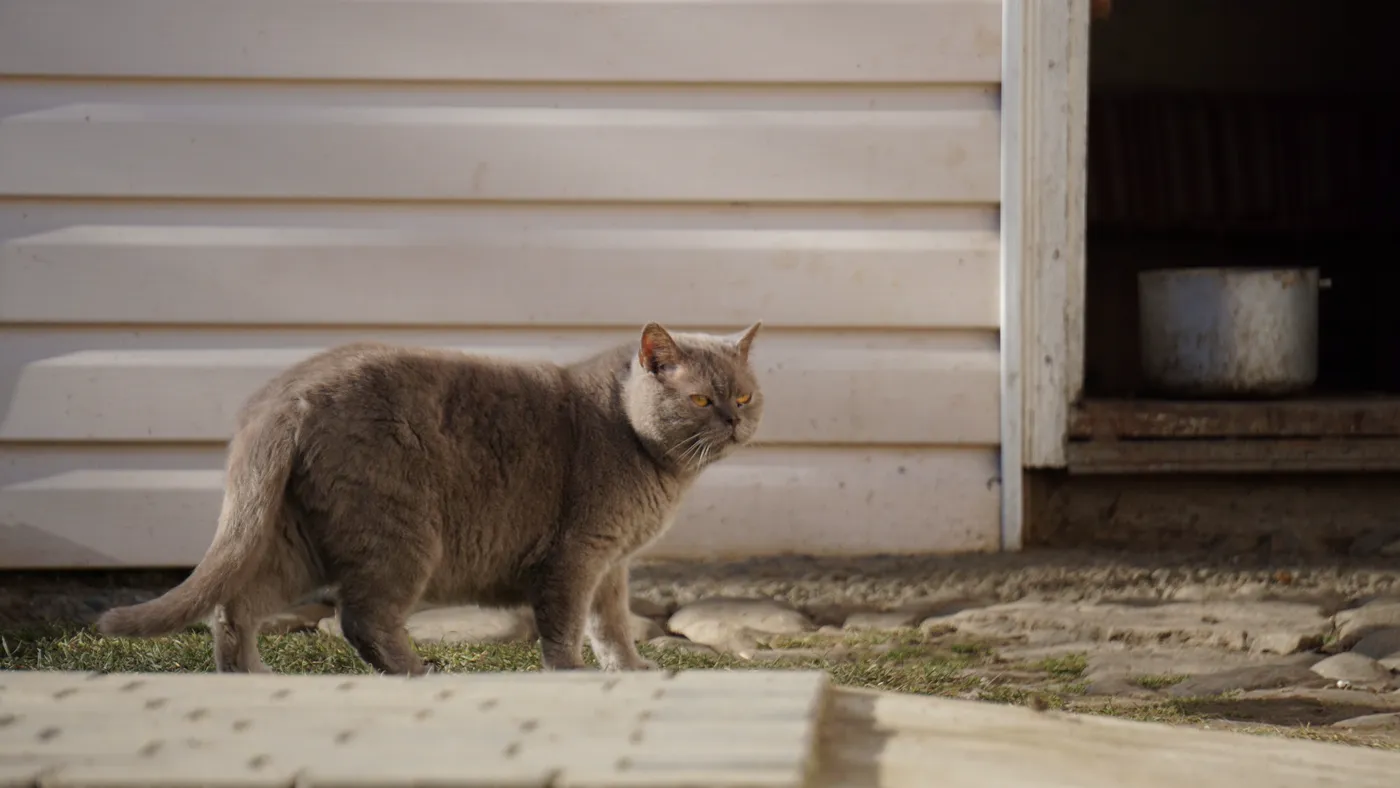
The British Shorthair is a typical indoor breed. A scratching post, a couple of beds and some toys are enough; it is not inclined to jump high or climb curtains because of its heavy build.
Window screens are essential. The breed is calm, but a cat that has spotted a bird reacts exactly like any other.
Price in Moldova
A British Shorthair kitten in Moldova costs 3,000–10,000 MDL. Without papers — 3,000–4,500 MDL; with a WCF/FIFe registration from a cattery — 6,000–10,000 MDL. Rare colours (lilac, chocolate, colourpoint) cost more than blue.
At a breeder with papers the price includes vaccinations, parasite treatment, the registration and a contract. Kittens leave at three to three and a half months.