Breed overview
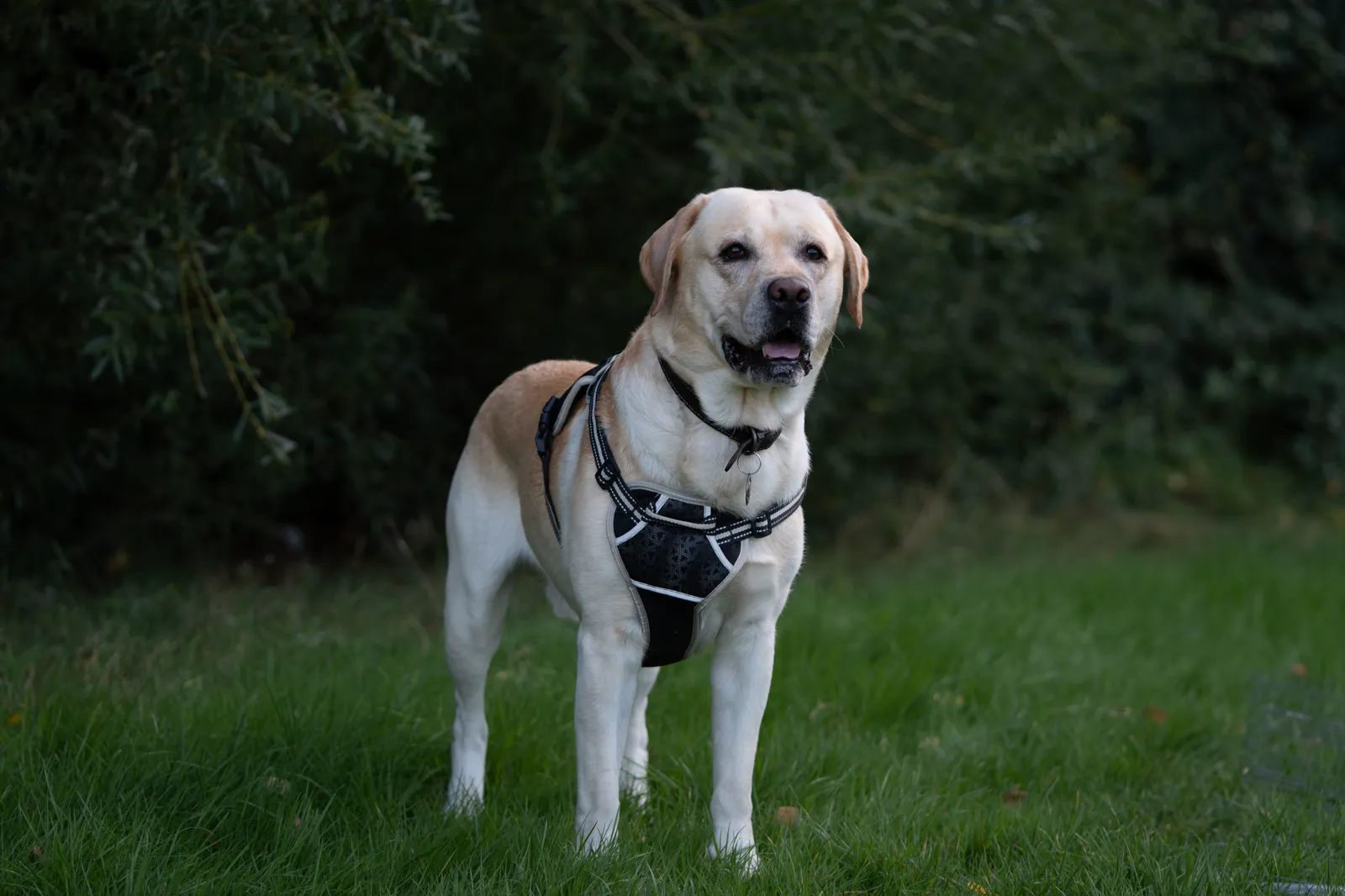
The Labrador Retriever was bred as a helper for Newfoundland fishermen: the dog hauled nets and brought fish out of icy water. Hence the dense water-repellent coat, the webbed feet and the “otter” tail that works as a rudder. The breed was later refined in Britain as a gundog.
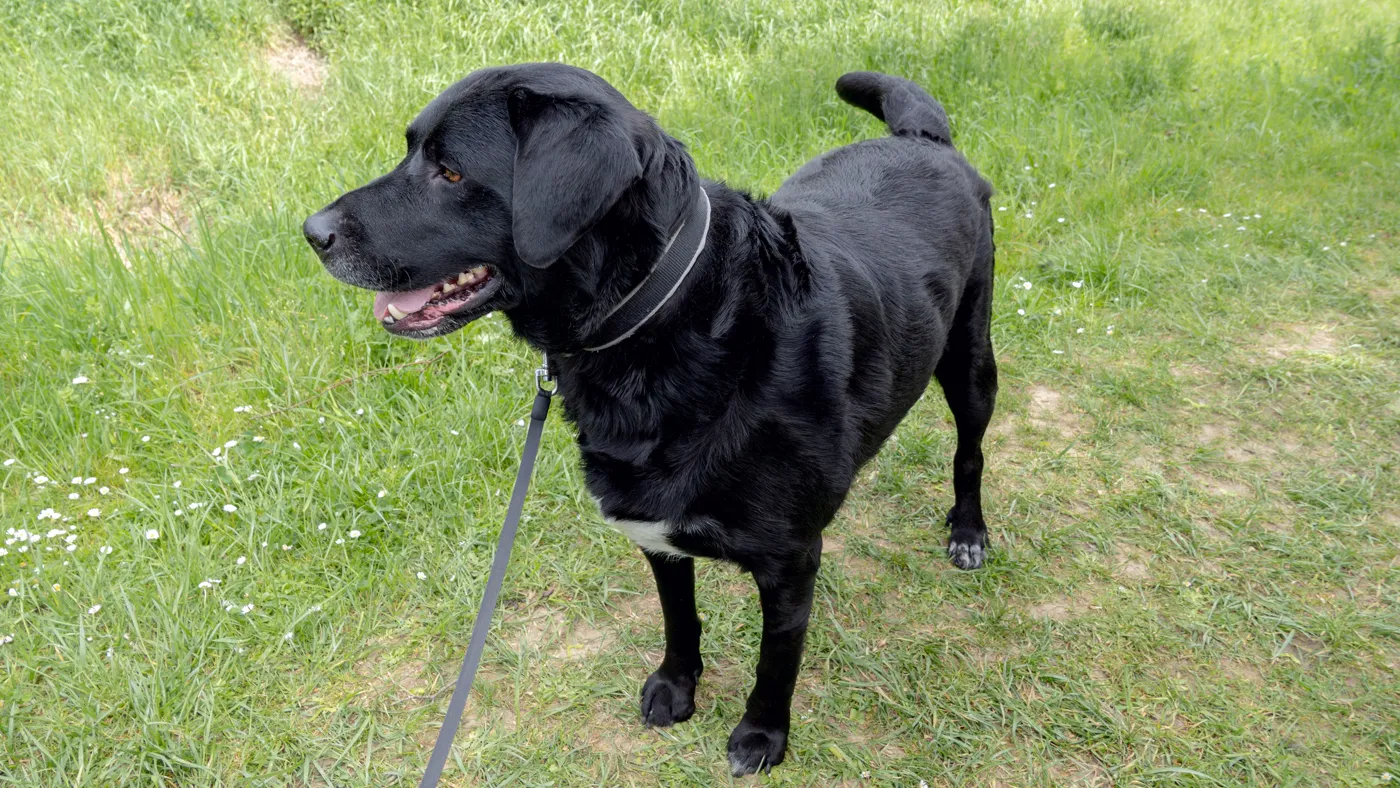
Standard height is 54–57 cm and weight 25–36 kg. Three colours are officially recognised: black, yellow and chocolate. There are two lines: the show type (heavier, calmer) and the working or field type (lighter, leaner and far more energetic).
The Labrador has held a place in the world's top family breeds for decades and is widely used as a guide dog and in animal-assisted therapy. In Moldova it is one of the most affordable large breeds with a clear origin.
Temperament
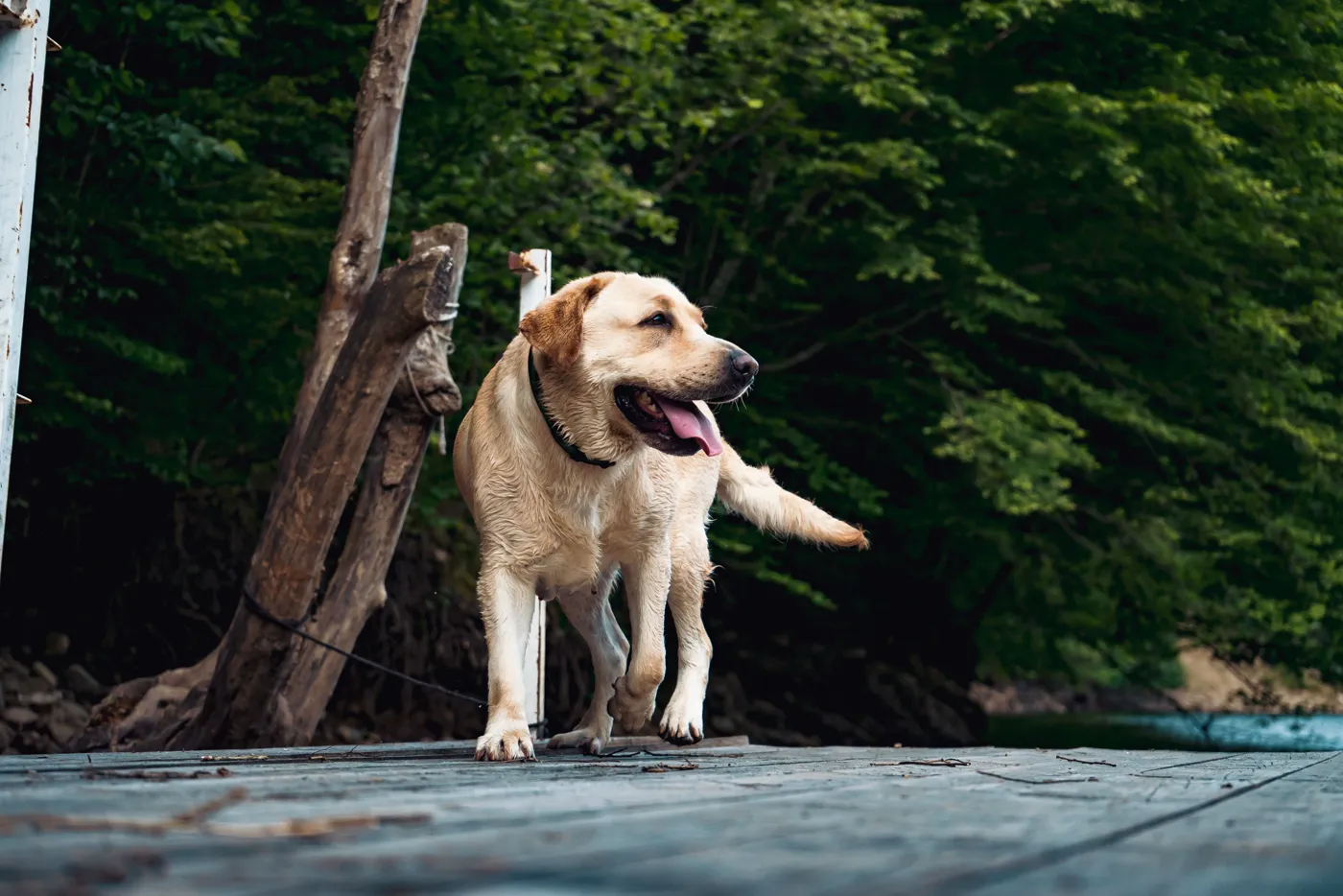
The Labrador is the benchmark of friendliness. It is delighted by everyone: family, guests, the courier, a strange dog. It will never be a guard dog, but for a family with children it is one of the best breeds: it tolerates rough play, rarely snaps and is almost never bad-tempered.
Trainability is high, but the puppy matures slowly — the adolescent phase of testing boundaries lasts until two or two and a half years. During that time the dog chews things, pulls on the lead and “forgets” commands. Short regular sessions, retrieving and thinking games all help.
The breed's main weakness is food. A Labrador eats anything and constantly, so the kitchen, the bin and food picked up in the street all become risks. Many Labradors are genetically prone to obesity — portion control is essential.
Care and health
Coat care is simple: brushing once a week with a rubber mitt, two or three times during the moult. Bathing is rare. The drop ears must be checked — they ventilate poorly and ear infections are not uncommon in the breed.
Health: joint dysplasia, retinal atrophy and a tendency to obesity. A responsible breeder tests the parents for HD/ED and hereditary eye disease. The puppy is not overloaded until the growth plates close — no jumping and no long runs beside a bicycle.
The diet is calculated by weight and activity, with treats counted into the daily allowance. Swimming is the ideal exercise: in summer a lake or a river is enough to keep a Labrador fit without stressing the joints.
Keeping
In a flat a Labrador lives calmly provided it gets two active walks of an hour to an hour and a half. An adult dog sleeps most of the day, but a puppy or adolescent needs constant occupation.
A house with a yard is comfortable, but the Labrador is not a chain or kennel dog: it has to live next to the family, otherwise it becomes anxious and noisy.
Price in Moldova
A Labrador puppy in Moldova costs 5,000–13,000 MDL. Without papers — 5,000–7,000 MDL; with an RKF registration and parental testing — 9,000–13,000 MDL. Chocolate is traditionally more expensive than black or yellow.
Keeping a large dog costs 1,500–2,500 MDL a month in food and veterinary bills. That is worth counting before you buy.