Breed overview
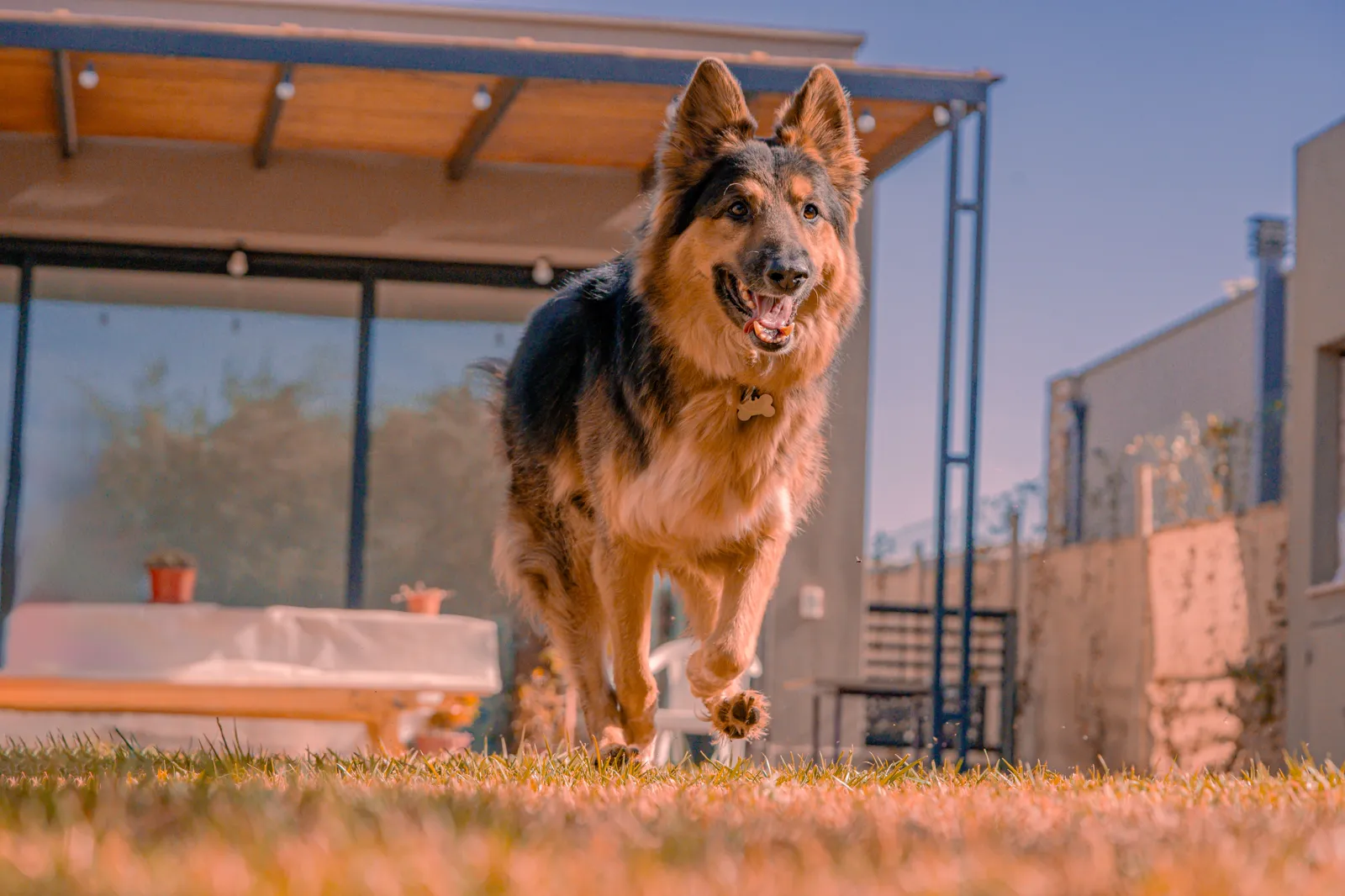
The German Shepherd was created at the end of the 19th century by Max von Stephanitz as a working herding dog and quickly became the benchmark of service breeds. Today it works in the police, in rescue services and in dog sport, and remains one of the most popular family dogs in the world.
This is a large dog, 55–65 cm tall and weighing 22–40 kg, with heavy bone and the characteristic topline. There are two lines: the working line — leaner, sharper and more enduring — and the show line, with a more pronounced rear angulation. For a family in a house, a dog from moderately working lines is the usual choice.
In Moldova the German Shepherd is one of the most affordable large breeds. Puppies are offered both by kennels with RKF papers and by private owners. The spread in prices is wide, and it almost always comes down to the parents' origin and the presence of documents.
Temperament and working qualities
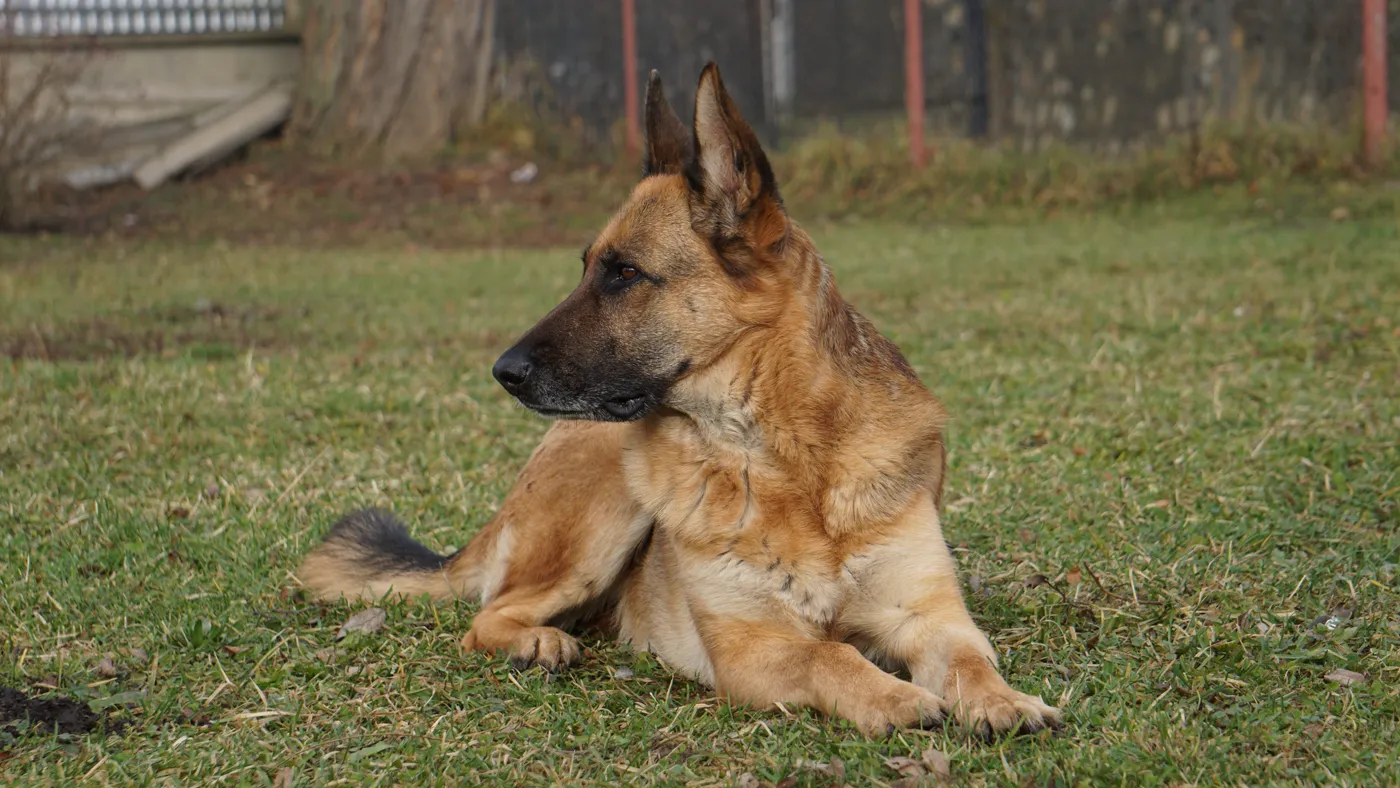
The defining trait of the breed is biddability. A shepherd wants to work in partnership with a person and copes badly with life “on its own” on a chain. It memorises commands quickly, reads tone of voice and can make independent decisions within the limits it was trained for.
Towards strangers the shepherd is watchful but not nervous: a sound temperament means calmly assessing the situation, not barking at every passer-by. The guarding instinct wakes up at 8–12 months, and by that point the dog must already have completed a basic obedience course.
Within the family a shepherd picks one main person but obeys every adult it has a relationship with. It is patient with children, though because of its size a puppy can knock a child over during play — supervision is needed on both sides.
Care and health
The dense double coat is brushed two or three times a week, and daily during the moult. Bathing is rare, three or four times a year, so as not to wash away the protective oils. Ears are checked weekly, nails trimmed as they grow.
The weak point of the breed is its joints. Hip and elbow dysplasia are common, so a responsible breeder has the puppy's parents X-ray tested with images on file. A puppy under one year must not be overloaded: long runs, jumping over barriers and stairs are off limits.
Feeding is either a quality dry food for large breeds or a natural diet calculated by a veterinary nutritionist. Shepherds are prone to gastric torsion, so they are fed two or three times a day in small portions and not allowed to run hard straight after eating.
Keeping
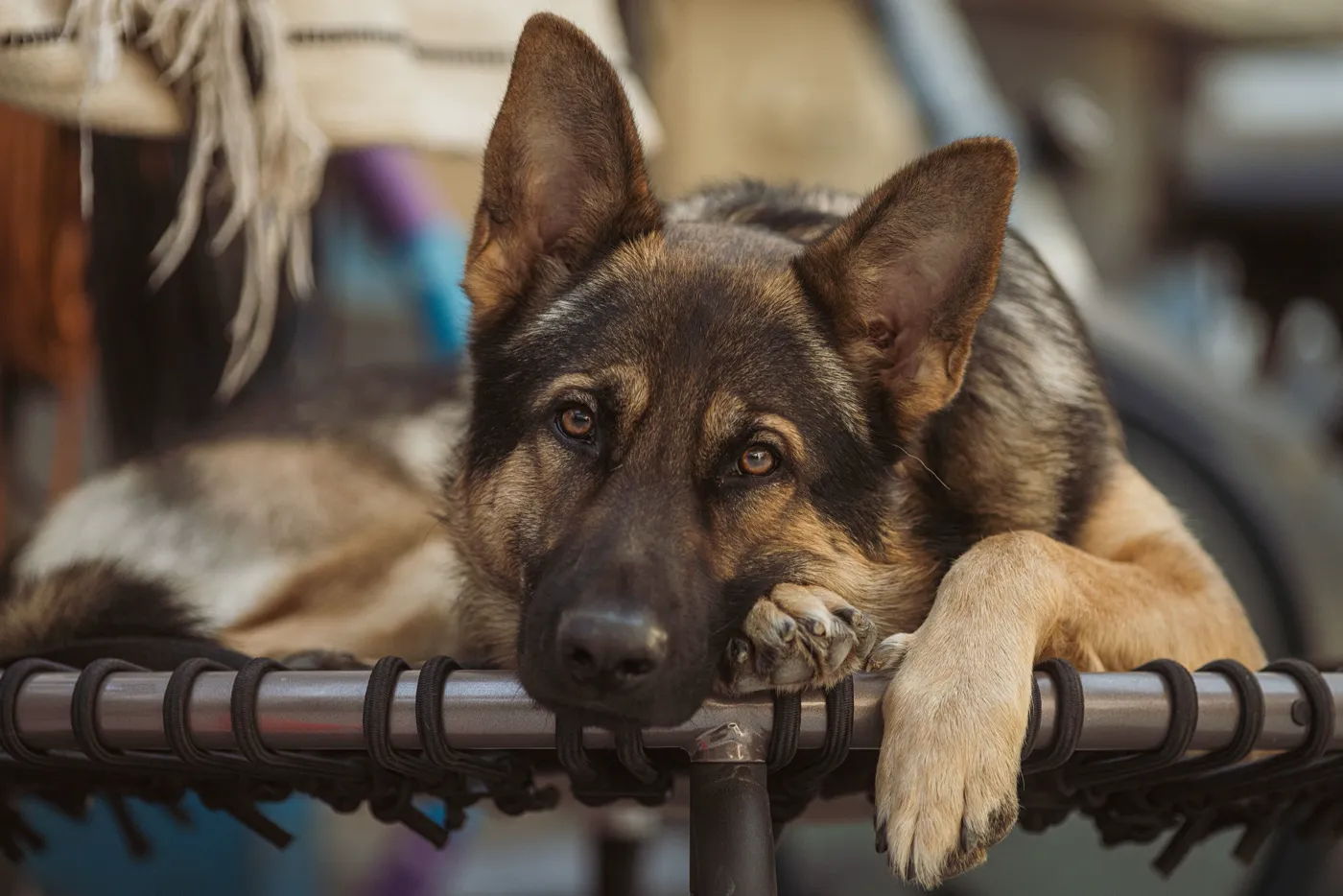
The ideal setup is a house with an insulated kennel run and free movement around the yard. A shepherd handles the Moldovan winter easily, but in summer it needs constant access to shade and water.
The breed can live in a flat too, provided it gets two full walks a day of 1.5–2 hours with real work: retrieving, obedience, running alongside a bicycle. A shepherd with no job means ruined furniture and barking out of boredom — and that is not a fault of the breed.
Puppy price in Moldova
A German Shepherd puppy in Moldova costs between 5,000 and 14,000 MDL. Without papers, from a home mating — 5,000–7,000 MDL. With an RKF registration, from parents holding working titles and dysplasia test results — 10,000–14,000 MDL.
If you need a dog to guard the house rather than to show, the sensible option is a puppy with papers from a mid-priced working line, around 8,000–10,000 MDL.